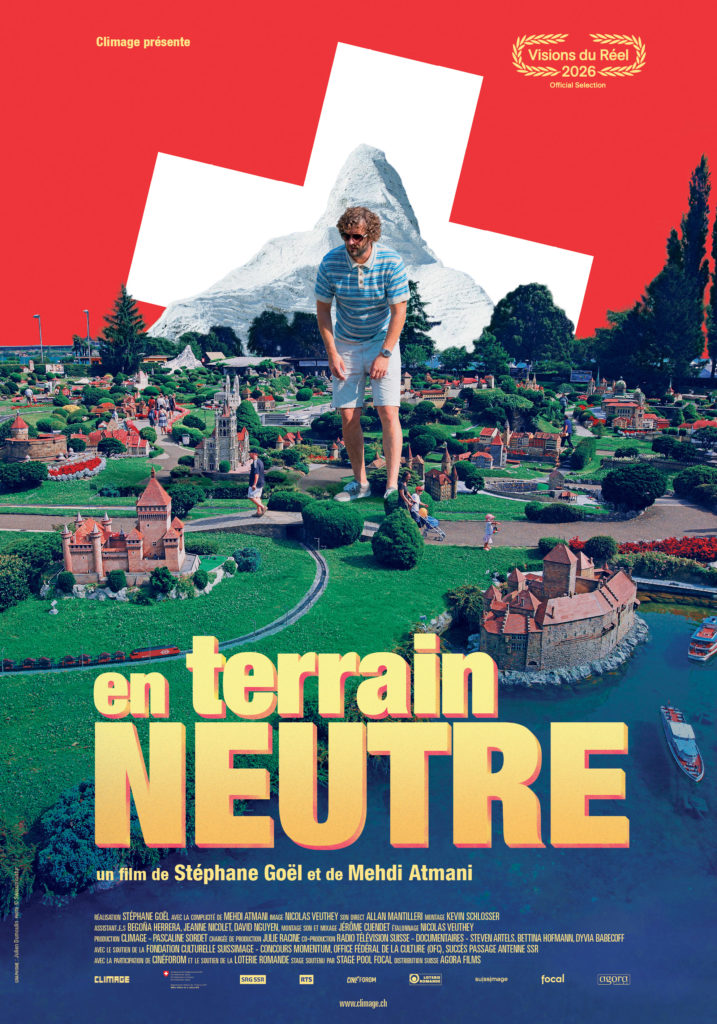
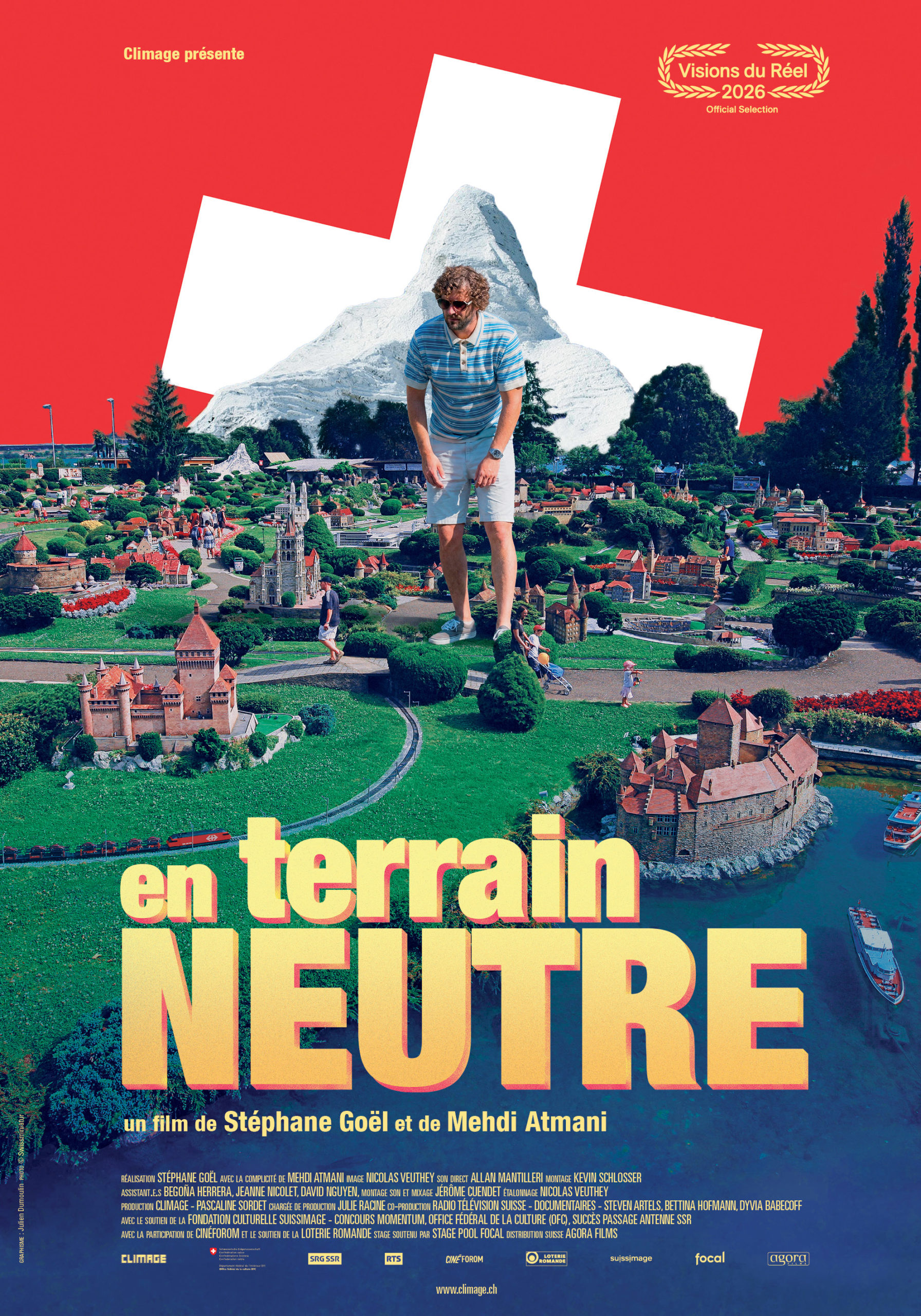
Stéphane Goël is a 60-year-old filmmaker with considerable experience tackling social and historical subjects. Although he lived in the United States in his youth to escape his rural background, and has travelled the world with his camera making documentaries and reports, Stéphane has always come back home — thanks to, or because of, the privilege conferred by his red passport with the white cross. This golden ticket has always made him “someone in hiding,” he says. Hiding behind his camera as he bears witness, in his own way, to a little of the world’s tragedy. Hiding behind his country of birth, whose lukewarmness and lack of commitment leave him in despair. He would like more openness, more courage, more panache — but, truth be told, he is not quite ready to face the consequences.
Mehdi Atmani is a 42-year-old freelance journalist. Despite his Arabic name — born of a compromise between a mother from Vaud descended from the songwriter Jean-Villard Gilles, and a Kabyle father, a former sea urchin fisherman in Algeria — Mehdi has always seen himself as a product of Lausanne through and through. He even blames his father for thinking this way. His father never stopped praising Switzerland as a land of welcome and stability, while erasing any reference to North Africa. A father whose remarkable efforts at integration, and mastery of the Vaudois dialect, allowed him to become a model of Swiss-ness.
Despite a paternal model that advocated discretion so as not to arouse gossip and the judgment of others about his foreign roots, Mehdi has always felt torn between two cultures, two visions of the world. In his work as a journalist and investigator, he has probed Switzerland from every angle — especially its most hidden and least flattering sides. And now, caught between the quiet complacency of the country where he was born and still lives, the pressure of his daughters questioning him about his origins, and the romanticised pull of his father’s homeland, he wants to know where he stands and how to inhabit the world.
In February 2022, the first sounds of war at Europe’s doorstep reverberated like a shockwave through the — all things considered sheltered — daily lives of Stéphane and Mehdi. Until then, both had considered neutrality a kind of moral fig leaf. They still do. It shields us from a certain form of reality. It gives us the illusion that we bear no responsibility — for war, for tensions, for imbalances — as though we had never chosen a side. It reinforces our sense of being above the fray, out of reach of poverty and violence. It allows us to sleep soundly at night, blinded by the optical illusions of our glorious history.
But with the war in Ukraine, the conflict in Gaza, Lebanon and Iran, the mask is slowly slipping, and the privilege we have enjoyed for so long is under threat. The situation is becoming increasingly untenable, and the complexity of international stakes is catching up with us. Our neutrality no longer holds up, despite all the artifices we might deploy. And yet, we are told, it is what defines us — the foundation of our national identity and our sense of a particular destiny: the famous “Swiss Sonderfall.”
Driven by this unsettling prospect, Stéphane and Mehdi embark on an introspective journey into the depths of Swiss neutrality, attempting to understand how it shapes our relationship with the world and with ourselves. Despite their difference in age, both share a certain humour and complicity — and both question the construction of their identity. What makes us Swiss? What role does neutrality play in our psyche? How does it influence the way we see the world, and the way the world sees us? Does being neutral necessarily mean being without desire, without doubt, without flavour, without passion? And if this neutrality were to disappear, could we continue to exist?